
You show up to work. You answer emails. You take care of everyone who depends on you.
From the outside, things look fine.
But beneath that surface, you may be running on very little sleep, carrying constant anxiety, feeling disconnected from yourself, or wondering why you're exhausted even when life appears stable.
Many people who reach out for therapy are not falling apart. They're functioning. They're meeting deadlines, caring for families, and handling responsibilities. What brings them in is the growing realization that simply getting through the day is taking more effort than it should.
One of the most common questions people ask is whether weekly therapy is really necessary.
The answer depends on your goals, symptoms, stress level, and what you're hoping to change. For many people, weekly therapy creates the consistency needed to move beyond symptom management and begin addressing the patterns underneath.
What Does Weekly Therapy Actually Mean?
Weekly therapy typically involves meeting with your therapist once every seven days for a scheduled session.
While there is no single schedule that works for everyone, weekly sessions are often considered the standard starting point because they create continuity. According to theAmerican Psychological Association, a strong therapeutic relationship is one of the most important factors in successful treatment outcomes, regardless of the specific treatment approach used.
That relationship develops more naturally when sessions occur regularly.
Weekly therapy allows you to:
Build trust more quickly
Stay connected to treatment goals
Address challenges while they are still fresh
Practice new coping skills with ongoing support
Notice patterns that may be difficult to see on your own
For many people, the work happening between sessions becomes just as important as the conversations that happen during them.
Why Weekly Therapy Is Often Recommended Early in Treatment
When someone begins therapy, there is often a lot to untangle.
You may be trying to understand years of anxiety. You may be recovering from burnout. You may be carrying experiences from childhood that continue to affect relationships, confidence, or emotional regulation.
Weekly sessions create space to build momentum.
Research published by the American Psychological Association shows that psychotherapy is effective for a wide range of mental health concerns and that consistent engagement supports stronger outcomes.
This is particularly important when addressing:
Anxiety disorders
Depression
Trauma and PTSD
ADHD
Burnout
Relationship difficulties
Major life transitions
Consistent therapy also helps people understand the connection between emotional symptoms and physical symptoms.
Many high-functioning professionals arrive believing they have a stress problem when, in reality, their nervous system has been operating in a heightened state for years.
The racing thoughts, irritability, digestive issues, poor sleep, muscle tension, and constant feeling of being "on" are not separate experiences. They are often connected.
8 Signs It May Be Time for Weekly Therapy
1. You're Functioning, But Barely
You continue meeting expectations, but every task feels heavier than it used to.
You may spend most of your energy simply maintaining appearances while privately feeling overwhelmed.
Functioning is not always the same thing as thriving.
2. Anxiety Is Following You Everywhere
Anxiety does not always look dramatic.
Sometimes it looks like:
Overthinking conversations
Constant planning
Difficulty relaxing
Trouble sleeping
Feeling responsible for everything
If anxiety is showing up daily, weekly therapy can provide the consistency needed to understand what is driving it.
3. You Keep Running Into the Same Problems
Different jobs. Different relationships. Different circumstances.
Yet the same struggles continue appearing.
When patterns repeat, it is often a sign that something deeper deserves attention.
Weekly therapy allows enough contact to identify those patterns before they disappear into the background again.
4. Rest Isn't Helping
Many people assume exhaustion means they need a vacation.
Sometimes they take one and come back feeling exactly the same.
Burnout can involve emotional exhaustion, cynicism, reduced motivation, and chronic stress. The World Health Organization recognizes burnout as an occupational phenomenon resulting from unmanaged workplace stress.
If rest alone is not restoring you, there may be more going on beneath the surface.
5. Therapy Helps, But Progress Feels Slow
If you are already attending therapy every few weeks, you may notice that significant time passes between sessions.
Sometimes important experiences lose momentum before they can be explored.
Increasing session frequency can help maintain continuity and create deeper insight.
6. You're Processing Trauma
Trauma work often benefits from consistency.
Research from the National Center for PTSD, part of the U.S. Department of Veterans Affairs, notes that evidence-based trauma therapies rely on structured and ongoing engagement to support recovery.
This does not mean everyone needs weekly therapy forever. It means regular support may be particularly valuable during active healing.
7. You're Going Through a Major Life Change
Certain periods naturally require more support.
Examples include:
Divorce
Grief
Career changes
Becoming a parent
Perimenopause
Caring for aging parents
Relocation
Even positive changes can create significant emotional strain.
8. Survival Mode Has Become Your Normal
You wake up already thinking about everything you need to accomplish.
Your mind rarely feels quiet.
You move from one responsibility to the next without much room to recover.
When survival mode becomes routine, weekly therapy can help create space to understand what your body and mind have been trying to communicate.
Weekly Therapy vs. Biweekly Therapy
Both schedules can be helpful.
The better option depends on your current needs.
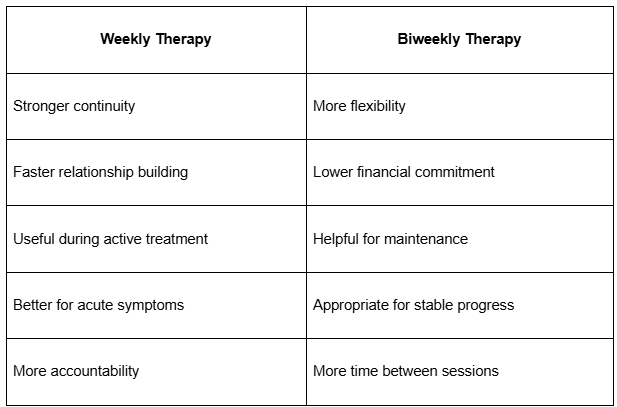
Weekly therapy is often helpful when symptoms are actively affecting daily life.
Biweekly therapy may work well when someone has already developed coping skills and wants ongoing support without the same level of intensity.
How Do You Know If Therapy Is Working?
Many people expect therapy progress to feel obvious.
In reality, change often starts quietly.
You may notice:
Less emotional reactivity
Better boundaries
More self-awareness
Improved communication
Greater resilience during stressful situations
Better sleep
Reduced anxiety symptoms
According to the National Institute of Mental Health, psychotherapy can help improve functioning and symptom management across many mental health conditions when treatment is matched appropriately to the individual.
Progress is not always measured by feeling happy all the time.
Sometimes it is measured by recovering more quickly after difficult moments.
When Weekly Therapy Might Not Be Necessary
Not everyone needs weekly sessions indefinitely.
As symptoms improve, many people transition to:
Biweekly therapy
Monthly maintenance sessions
Periodic check-ins during stressful periods
Therapy should adapt to your needs.
The goal is not to keep people in therapy forever. The goal is to provide the right level of support at the right time.
Is Weekly Therapy Worth the Cost?
Cost is a valid concern.
Therapy is an investment of both time and money, and it is reasonable to ask whether weekly sessions are worth it.
For many people, untreated anxiety, burnout, depression, and chronic stress carry costs of their own.
These costs may appear as:
Reduced productivity
Relationship strain
Sleep problems
Physical health concerns
Emotional exhaustion
Weekly therapy is not necessary because a provider says it is.
It is valuable when it helps you make meaningful progress toward the life you want to live.
Common Myths About Weekly Therapy
Myth: Going Weekly Means Something Is Wrong With Me
Many people in weekly therapy are successful professionals, parents, healthcare workers, business owners, and caregivers.
Seeking consistent support is not a sign of failure.
Myth: Therapy Is Only For Crisis Situations
Therapy can absolutely help during a crisis.
It can also help prevent one.
Many people begin therapy because they recognize early signs of stress before things become overwhelming.
Myth: Therapy Should Work After A Few Sessions
Real change often takes time.
Patterns that developed over the years rarely shift in a matter of weeks.
Therapy is not about quick fixes. It is about creating lasting understanding and meaningful change.

The Real Question Isn't How Often You Should Go
The better question is what kind of support you need right now.
There are seasons when monthly check-ins may feel sufficient.
There are also seasons when life asks more of you, and weekly therapy provides the consistency needed to stay connected to yourself while navigating it.
If anxiety, burnout, trauma, depression, relationship challenges, or major life transitions are affecting your quality of life, weekly therapy may offer the structure needed to move beyond simply getting through the week.
At Integrative Healthcare Alliance, we believe mental health care should consider the whole person. Symptoms matter, but so does the story behind them. Through a personalized, whole-person approach, we help clients understand the connections between emotional health, physical health, stress, hormones, lifestyle, and nervous system regulation.
Whether you're seeking support in Corona del Mar or Rancho Cucamonga, the conversation starts with understanding what your mind and body have been trying to tell you.
That is where we start.
Frequently Asked Questions
Is weekly therapy more effective than biweekly therapy?
Not necessarily. Weekly therapy often creates stronger continuity and momentum, particularly during active treatment. Research consistently shows that treatment engagement and therapeutic alliance contribute significantly to outcomes, according to theAmerican Psychological Association.
How long should I stay in weekly therapy?
The answer varies from person to person. Some individuals benefit from weekly therapy for a few months, while others continue longer depending on their goals, symptoms, and life circumstances.
Can weekly therapy help with burnout?
Yes. Burnout frequently involves chronic stress, emotional exhaustion, and difficulty recovering. Weekly therapy can help identify contributing factors and develop healthier responses to ongoing demands. Learn more from theWorld Health Organization.
Is weekly therapy worth the financial investment?
For many people, the benefits include improved emotional health, stronger relationships, better stress management, and greater day-to-day functioning. The value depends on your individual goals and circumstances.
Can I reduce therapy sessions later?
Absolutely. Many clients begin with weekly sessions and transition to biweekly or monthly appointments as symptoms improve and goals are achieved. Therapy frequency should evolve with your needs.