Can a Sleep Optimization Program Improve Mood and Focus?
I see the same pattern again and again in my practice. People are functioning, showing up, and doing what needs to be done, but they are doing it on a nervous system that hasn’t had consistent, restorative sleep in a long time. Their nights are light or broken, their mornings feel heavy before the day even begins, and over time their tolerance for stress shrinks in ways they don’t recognize at first.
Eventually, emotional symptoms follow. Anxiety sharpens. Low mood deepens. Irritability shows up faster than it used to. Focus slips, memory feels unreliable, and people begin to wonder why treatment that once helped doesn’t seem to work the same way anymore. As a Psychiatric–Mental Health Nurse Practitioner, I don’t treat sleep as a side issue. I treat it as a foundation. That’s why a sleep optimization program is built directly into how I practice at Integrative Healthcare Alliance.
Why Sleep Is Central to Mental Health
Sleep is when the brain regulates emotion, processes stress, and resets the nervous system. It’s also when memory consolidates, and cognitive function restores itself. When sleep is disrupted, the brain doesn’t fully stand down. Stress hormones stay elevated. Emotional regulation becomes harder. The nervous system stays reactive instead of flexible.
Over time, this shows up as anxiety that feels constant instead of situational, a low mood that doesn’t lift the way it used to, and emotional sensitivity that seems out of proportion. Brain fog sets in. Decision-making feels harder. Many people assume their diagnosis is worsening or that treatment has failed, when what’s really happening is that their system hasn’t been allowed to recover.
Your symptoms aren’t your identity. They’re information. And sleep is often where that information becomes clearest.
Sleep’s role in emotional and cognitive health is strongly supported by research. In “The Impact of Sleep on Health and Well-Being,” published by the Mental Health Foundation, researchers note that we spend nearly one-third of our lives asleep, and that sleep is as essential to mental health as diet and exercise. The report highlights that up to one-third of the population experiences insomnia or poor-quality sleep, which is associated with increased anxiety, low mood, irritability, poor concentration, and reduced emotional regulation, supporting why fragmented or non-restorative sleep can undermine psychiatric treatment even when medications or therapy are in place.
Why Enough Hours Doesn’t Mean Rest
One of the most common things I hear is, “I get enough sleep, but I still wake up exhausted.” Sleep quantity and sleep quality are not the same thing. You can spend eight hours in bed and still miss the deeper stages of sleep that support mood stability and clear thinking.
Disrupted sleep often looks like difficulty falling asleep, frequent waking, early morning waking, vivid dreams, or feeling wired at night despite physical exhaustion. When sleep lacks depth, emotional regulation becomes fragile. Stress feels louder. Medications may seem inconsistent. Therapy feels harder to absorb.
If you don’t know what your body feels like when it’s truly rested, it’s difficult to know whether treatment is actually working.
When the Nervous System Never Fully Shuts Off
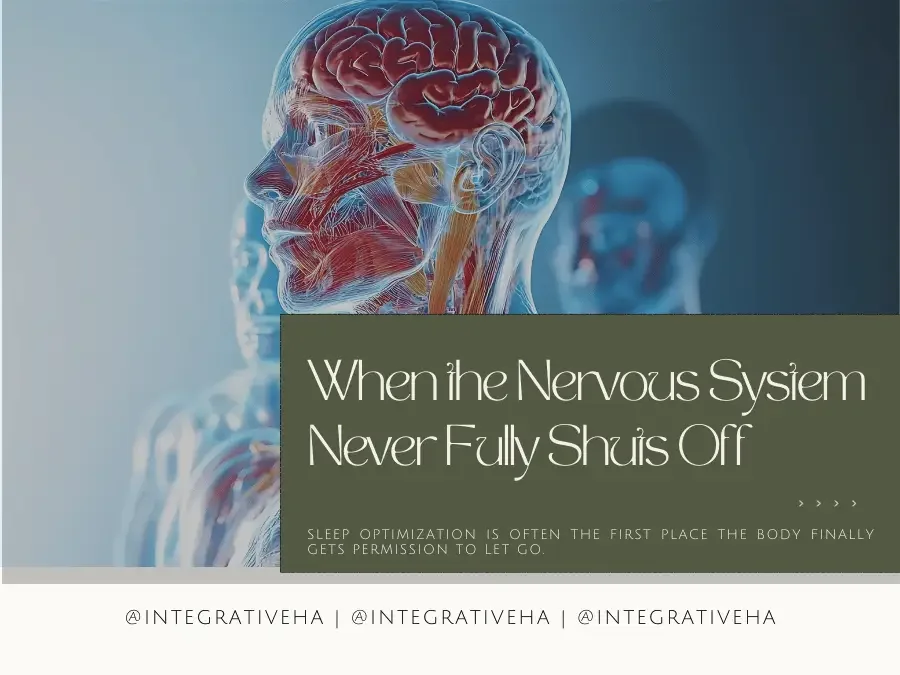
For many people, sleep problems aren’t about habits. They’re about a nervous system that never fully shuts off. High-functioning anxiety often looks like productivity, constant thinking, and staying busy. On the outside, things look fine. On the inside, the system is always alert.
If your body is acting like there’s danger nearby, sleep will struggle. The brain stays watchful. Muscles don’t fully relax. Hormones stay activated longer than they should.
Sleep optimization is often the first place the body finally gets permission to rest. When the nervous system feels safer, sleep deepens. When sleep deepens, mood and focus often follow.
Why Standard Mental Health Care Often Overlooks Sleep
In many psychiatric settings, sleep is addressed quickly, if at all. A few questions, maybe a checklist, sometimes a prescription. But sleep disruption is rarely just about falling asleep.
Sleep is influenced by stress hormones, circadian rhythm, medication timing, nervous system regulation, and what the body has learned to expect at night. When these layers aren’t explored, care can stall. Symptoms persist. People blame themselves for something that is physiological, not personal.
This is psychiatry with more time, more attention, and more context.
What the Sleep Optimization Program Focuses On
The goal of a sleep optimization program isn’t perfect sleep; it’s regulation. When I work with clients, we focus on patterns rather than forcing solutions. We look at how your body responds over time, what evenings feel like in your system, and what helps your body settle or keeps it alert.
Care may include thoughtful medication adjustments or timing changes, support for circadian rhythm, nervous system regulation strategies, and reviewing labs when sleep symptoms don’t match the surface story. We also look closely at how mood, anxiety, and cognition shift in response to sleep changes.
Your body is my compass. Sleep is one of the clearest signals it gives us.
Where Sleep Optimization Fits Into Care
This approach is explained in more detail through our sleep optimization program, where we outline how sleep is assessed alongside mood, anxiety, cognitive function, and stress response. It shows how integrative psychiatry supports deeper, more stable rest by addressing physiology, nervous system patterns, and mental health together.
For many people, this is the first time sleep has been treated as a clinical priority rather than a personal shortcoming. That shift alone can be relieving.
Who This Work Is For
This work is especially helpful for people whose mental health symptoms worsen when sleep is disrupted. That includes individuals who feel more anxious at night, wake feeling unrefreshed, or notice their mood and focus fall apart after poor sleep. It’s also a strong fit for people who have tried medication or therapy and felt some benefit, but never quite reached stability.
Many of the people I work with are capable, responsible, and used to pushing through exhaustion. They manage work, family, and responsibilities while feeling wired at night and depleted during the day. If your body feels tired but your mind won’t slow down, or if sleep issues seem to sit underneath anxiety, low mood, or brain fog, this approach helps address the root patterns instead of treating sleep as an afterthought.
What Progress Usually Looks Like
Progress does not mean sleeping perfectly every night. It means your system becomes more predictable and less reactive. Over time, your body learns how to settle more consistently instead of staying on alert.
Many people notice fewer nighttime awakenings, deeper sleep, steadier mood, and clearer thinking. These shifts often happen gradually, but they build. That steadiness is what allows mental health care to work more effectively over time.
When Sleep Struggles, Everything Feels Heavier
Sleep is a biological requirement, not a luxury. When sleep is fragmented, emotional regulation becomes harder, stress feels louder, and cognitive effort increases. Everything feels heavier because the system has not had time to recover.
When sleep is supported, symptoms often soften because the body finally has what it needs. This is not about trying harder. It is about giving the nervous system a chance to rest.
Where Rest Becomes Part of the Treatment Plan
At Integrative Healthcare Alliance, I work with people who are tired of pushing through exhaustion and wondering why they still do not feel well. If sleep has been affecting your mood, focus, or ability to handle stress, it makes sense that everything feels harder. Mental health care works best when the nervous system is allowed to recover instead of constantly compensating.
When we focus on sleep alongside mood and cognition, care becomes steadier and more supportive. This approach is meant to reduce reactivity, improve emotional regulation, and support clearer thinking over time.
FAQs
Can poor sleep affect mental health?
Yes. Ongoing sleep disruption increases stress hormones and reduces the brain’s ability to regulate emotion, which can worsen anxiety, low mood, and irritability.
How does sleep impact focus and memory?
Sleep supports memory consolidation and cognitive clarity. Poor sleep often leads to brain fog, slower thinking, and difficulty concentrating.
Is a sleep optimization program the same as sleep hygiene?
No. Sleep hygiene focuses on habits, while a sleep optimization program addresses nervous system regulation, physiology, medication timing, and patterns over time.
How long does it take to see improvement?
Sleep improvement is often gradual. Many people notice steadier progress over weeks as the nervous system begins to regulate more consistently.
Who benefits most from a sleep optimization program?
People with anxiety, mood symptoms, burnout, or cognitive difficulties linked to disrupted sleep often benefit the most.